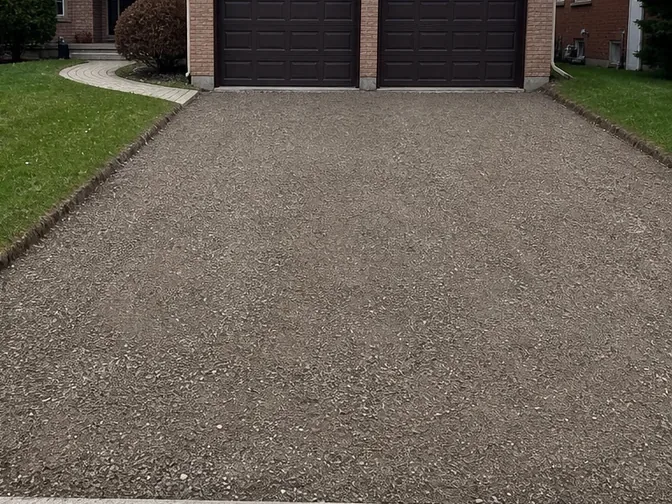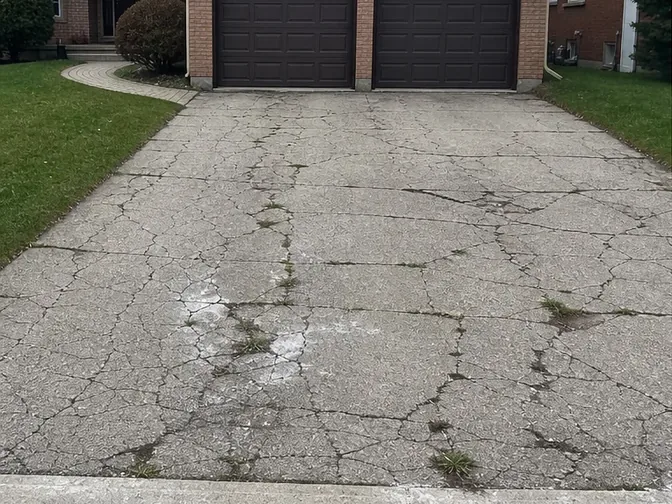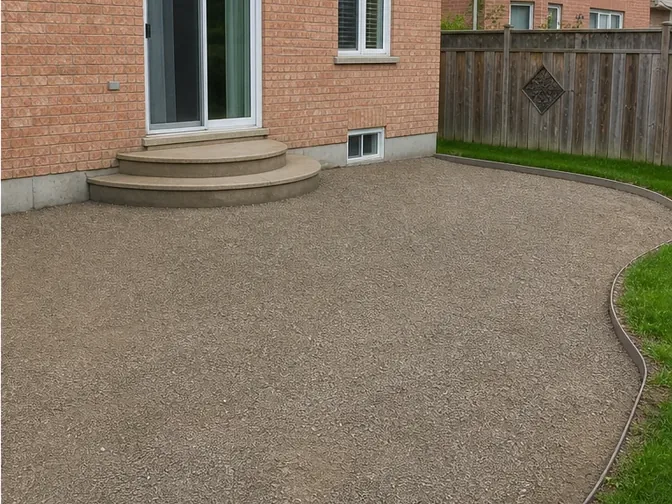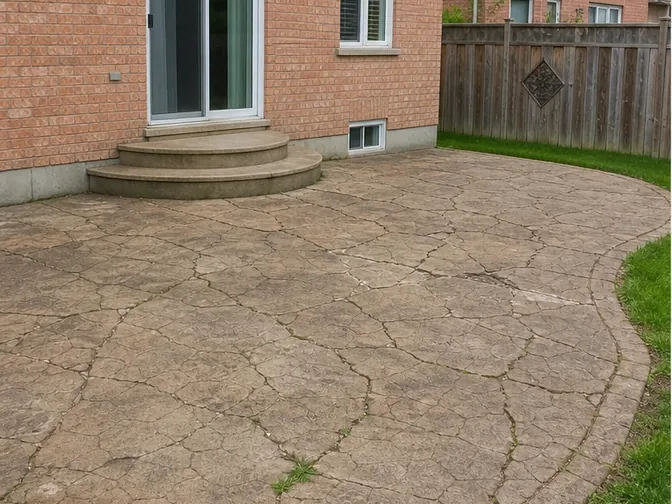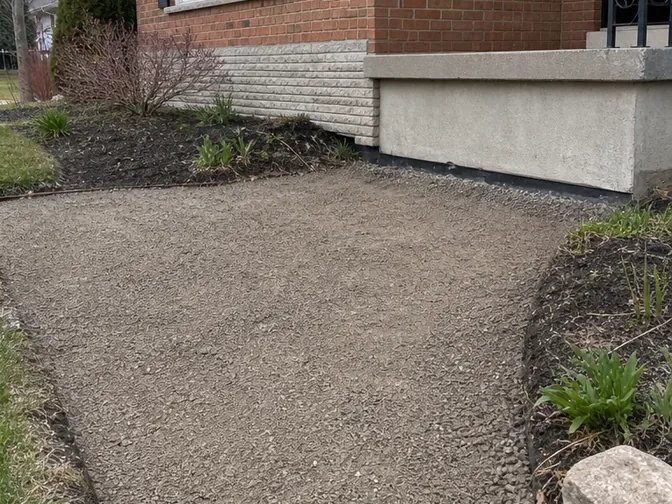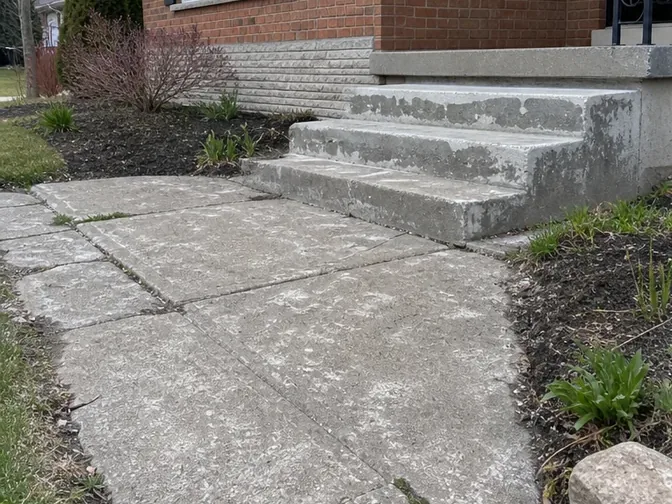
Concrete has a hard life in the GTA, freeze-thaw heaves it, road salt eats the surface, and once cracking starts it never goes backward. At some point patching is just paying twice, and removal is the honest fix. It’s also a job where the prep matters as much as the breaking: utility locates before anything moves, clean saw cuts against whatever stays, and every load going somewhere it should. Here’s what concrete removal and driveway demolition cost in York Region, and the straight answers to what people actually ask before booking.
Concrete removal cost in York Region: rates and lump sums
Exterior concrete removal, including driveways, patios and walkways, runs $2–$6 per square foot. In whole-project terms, a small patio or walkway typically costs $500–$1,500, a single-car driveway $1,500–$3,500, and interior slab work $4–$8 per square foot because of the equipment and dust-control requirements. Pool deck removal prices lower on this same scale when it is bundled with a full pool removal. See that page if the deck and pool are coming out together.
| Cost factor | Effect on price |
|---|---|
| Thickness | Standard GTA driveways are 4–5 inches; older or commercial pours can be 8+. Disposal is billed by weight, so thickness drives cost more than area. |
| Reinforcement | Rebar or wire mesh must be cut from the concrete, typically adding $1–$3 per square foot. |
| Access | Machine-accessible work is the low end of the range; rear yards reached through narrow gates move toward hand equipment and the top end. |
| Edges that stay | Saw-cutting clean lines against remaining concrete adds a step but protects what you’re keeping. |
| Disposal tonnage | More weight, more tipping cost, another reason thick slabs quote higher. |
Every quote is a firm written total. You’ll never see an hourly rate or a post-job disposal surcharge. Get yours before you call around. It’s free, and it won’t move once the truck shows up.
Utility locates: the legally required first step
It’s the law in Ontario: no breaking ground without utility locates. Gas, hydro, water, and telecom lines can sit inches under a slab, especially where a driveway got poured over older service runs. We arrange locates on every job, no exceptions. They add a few days of lead time, so the right time to book concrete removal is a week or two before you need the space cleared, not the morning of, call now and we’ll get the request in.
How we remove concrete: the process step by step
- Locates ordered and confirmed. Nothing breaks until the ground is marked.
- Saw-cutting. Clean relief lines are cut wherever removal meets concrete that stays, garage slabs, shared walkways, city sidewalk.
- Breaking. A machine-mounted breaker where access allows; smaller equipment within a metre of foundations so vibration stays away from the house.
- Steel separation. Rebar and mesh are cut out and sent to metal recycling.
- Loading and haul-away. Rubble is loaded directly to the truck or bin, most driveways are broken and gone in one day.
- Base grading. The exposed sub-base is graded and left ready for the new pour, pavers, or topsoil.
Where the concrete goes: recycling, not landfill
Every load we haul goes to an aggregate recycler, where your old driveway gets crushed into road base and fill for the next project. It’s the right way to do it, and since recyclers charge less than landfill tipping, it keeps your disposal cost down too. Recycling is just how we operate, not a line you pay extra for.
Repair, overlay, or remove: an honest framework
- Repair makes sense for isolated cracks and surface spalling on an otherwise sound, level slab.
- Overlay (paving over) works only when the existing concrete is stable, drains correctly, and height clearance allows. It inherits any movement underneath.
- Remove and repour is the right call when cracking is widespread, heaving returns every spring, or the slab has settled toward the house. As a rule of thumb, when more than a third of the surface needs work, removal wins on ten-year cost.
One case deserves prompt attention: a slab that has settled so it drains toward the house. The removal plan should correct the failed surface without assuming the replacement design or drainage approval.
Signs your concrete is past saving
- Heaving that returns every spring despite grinding or patching
- Cracks wide enough to catch a shoe, or slabs moving independently on either side of a crack
- Widespread surface flaking (spalling), freeze-thaw damage is inside the pour
- Water pooling against the house after rain
Concrete removal across York Region and Toronto
We quote driveways, patios, walkways, basement floors, garage slabs and pool decks across York Region and Toronto. The address, dimensions, thickness, reinforcement, access and required finish determine the equipment and disposal plan. Larger projects in extended markets are reviewed individually.